Technology

Built in the field. Structured as one body.

DendroSeal ISB means Integral Insulating and Sealing Body. It is not a pre-sized clamp or a product applied the same way everywhere. It is a continuously constructed structural body designed around the actual field condition.

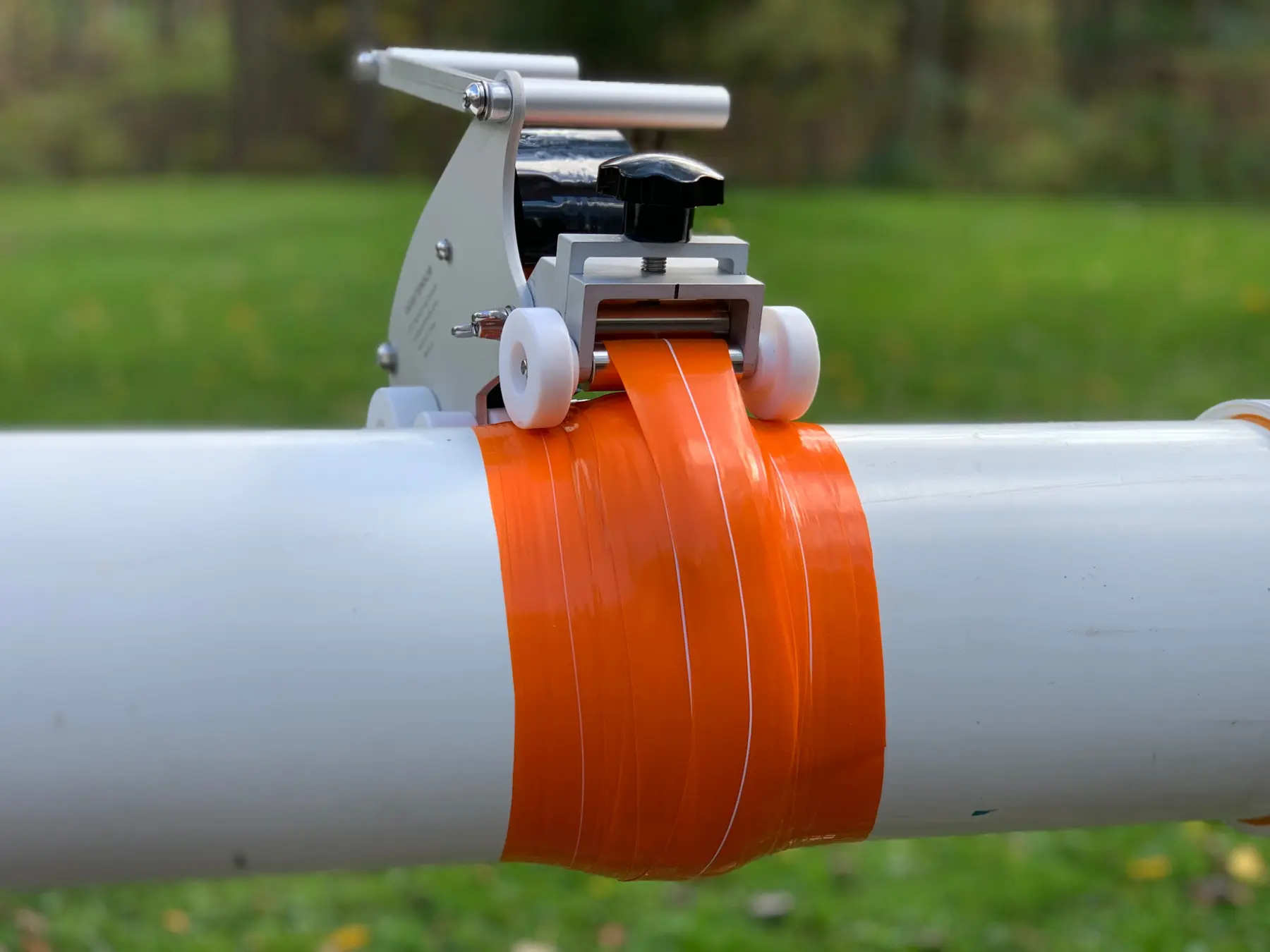
Dedicated winding device constructing an orange ISB around a 200 millimetre PE pipe

A dedicated winding device constructs an ISB around a 200 mm PE pipe. Public imagery shows the equipment and progressive formation without disclosing case-specific construction parameters.

Three primary application domains

One integral body. Three primary field applications.

A DendroSeal ISB is configured for one or more of three primary application domains. The field condition determines which functions are required and how they are combined within one inseparable body.

01

Leak-control sealing

A case-specific ISB may constrain and progressively control leakage so the resulting condition can be inspected and tested against defined acceptance criteria.

−90 °C to 260 °CCurrent DendroSeal engineering working range for selected, tested configurations. Medium, pressure, geometry, exposure and verification still govern each case.
02

Electrical insulation

A case-specific ISB may provide, restore or supplement an insulating barrier, subject to the electrical design basis, materials, environment and required testing.

500 V/milDendroSeal test basis · approximately 19.7 kV/mm.
Up to 69 kVEngineered application configurations, with voltage class and acceptance testing defined for the case.
03

Corrosion protection

A case-specific ISB may separate a vulnerable surface from water, oxygen and other corrosive exposure, subject to preparation, continuity, compatibility and service conditions.

Water + oxygenBarrier functions limit contact with two principal drivers of corrosion.
Organic solventsSelected configurations are compatible with specified media, including petroleum service.
>50 yearsService-life specifications for selected constituent materials.
>10 yearsDocumented outdoor and buried field use.

Cross-domain engineering capabilities

Integrated where the field condition requires them.

These are not separate application domains. They may be incorporated into any of the three domains when required by the field condition.

Mechanical performance enhancement — reinforcement, load redistribution, retention and resistance to mechanical disturbance may be engineered into leak-control sealing, electrical insulation or corrosion protection.

Media isolation — barrier functions may isolate the component or protected interface from process media and external exposure across all three application domains.

Case-specific design inputs

A useful technical boundary is not a universal rating.

Pressure, temperature, medium, geometry, substrate, mechanical demand, exposure duration and verification basis must be considered together.

−90 °Cto260 °C

Current DendroSeal engineering working range

DendroSeal has tested selected high- and low-temperature ISB configurations across this span. It is not an independent certification or an automatic rating for every medium, pressure, geometry, exposure duration or construction.

Pressure

Evaluated from the actual force system

Pressure alone is not enough. Opening or affected-area geometry, component condition, leakage behavior, support and the constructed body all matter.

Chemical compatibility

The actual medium governs

Selected ISB configurations use materials compatible with specified organic solvents, including petroleum service. The actual medium, concentration, temperature and exposure duration still require review.

Field construction

Online and non-hot-work where approved

The core method does not depend on welding, open flame, site power, external heat or adhesive bonding. Whether work may proceed online remains a case-specific safety and engineering decision.

Service-life evidence
>50 yearsSelected constituent-material service-life specifications
>10 yearsDocumented outdoor and buried field use

Material basis and field history are recorded separately

A material-life specification is not an unconditional warranty for a completed ISB. Configuration, installation, exposure, inspection and operating history remain part of the service-life basis.

Industries and operating environments

Industry identifies context. It does not predetermine the answer.

Industry classification helps DendroSeal retrieve relevant hazards, standards, operating constraints and prior learning. Every field condition is still reviewed on its own evidence.

01Oil & petroleum
02Chemical & petrochemical
03Municipal utilities
04Gas transmission & distribution
05Electric power transmission & distribution
06Nuclear power
07Conventional & hydro power generation
08Wind power
09Solar power
10Civil aviation & aircraft maintenance
11Rail & transit
12Marine & ship maintenance
13Data centers
14Hospitals & healthcare facilities
15Military & defense
16Emergency response & rescue
17Other critical infrastructure

These categories organize field evidence and case review. They do not imply a standard solution, certification or automatic case acceptance. Do not submit classified, export-controlled, nuclear safeguards or protected health information. Online case submission is not an emergency dispatch channel.

High-Resilience

Stored elastic energy becomes visible when the completed body is cut.

The PE400 demonstration is cut only after construction. The immediate release and displacement of the cut ISB makes retained circumferential tension, inward compression and stored elastic energy observable.

This controlled demonstration is evidence of structural behavior in that configuration; it is not a universal performance certification.

Engineering method

The framework protects the ability to reason — not a predetermined answer.

ObserveSeparate known / inferred / unknownFind the governing forceConstructInspectCorrect and learn
Technology disclosure boundary

Public materials explain functions, evidence and engineering logic. Layer count, overlap, tension, material selection and site-specific construction parameters remain controlled engineering information.